
Why buyers pick the name they know
October 24, 2026
Most business owners think sales come down to having the best product or the lowest price. But if you look at how people actually buy, that rarely holds up. Most buyers don't choose the best option. They choose the one they recognize.
Psychologists call this the mere-exposure effect. It is a simple pattern: people naturally prefer things simply because they see them often. Your brain burns a lot of energy every day making decisions. When it spots something it has already seen, it processes that thing with much less effort. Your mind confuses that easy feeling with safety and quality. Without even realizing it, you feel like you can trust it.
The everyday choice we all make
Think about the last time you walked down an aisle at the grocery store.
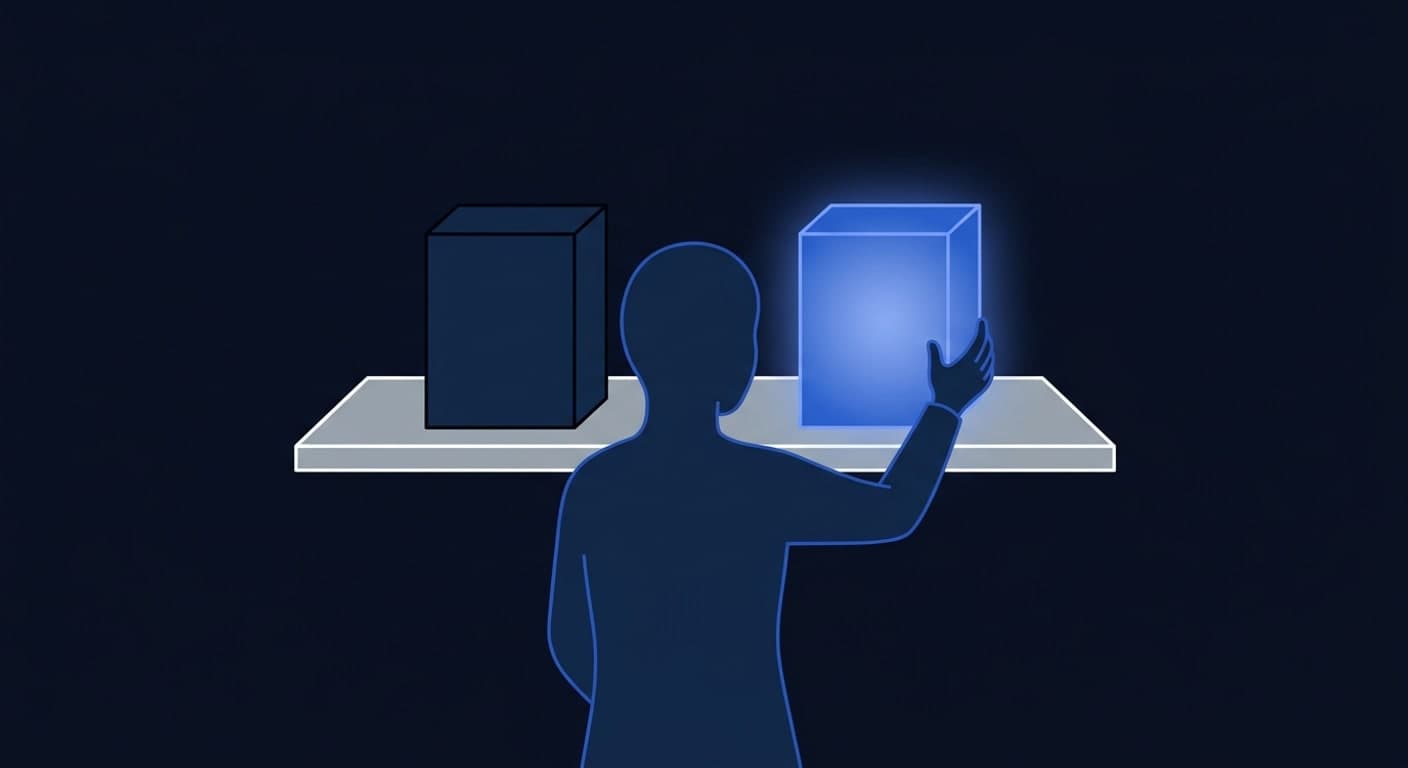
You needed something simple, like olive oil or dish soap. On the shelf, there was a plain bottle from a brand you had never heard of before, priced two dollars lower. Right beside it was a familiar bottle from a brand you see on billboards and social media every single week.
Which one did you put in your cart?
If you are like most people, you grabbed the familiar bottle. You didn't pull out your phone to compare ingredients or run a background check on the manufacturer. The unknown brand felt like an unnecessary gamble. The familiar name felt safe, reliable, and normal.
That small choice shows how human nature works. Novelty triggers caution. When an option is completely new, your subconscious treats it as an unknown risk. But when you see an option repeatedly without anything bad happening, your brain files it away as safe. That quiet feeling of safety is what drives decisions.
Why this decides your sales
This pattern explains why smaller, cheaper competitors don't automatically steal your deals. It also explains why having a superior service doesn't guarantee you will win clients.
When a client looks for help, they don't want to make an embarrassing mistake. Choosing an unknown vendor feels risky. If the project goes sideways, they have to explain to their team why they hired a stranger. But if they hire a recognizable vendor, the decision feels defensible.
Say a business owner finally decides to fix their sales process. If your company is a complete mystery to them, you start from zero. You have to prove your competence, your honesty, and your stability in a single phone call. But if that owner has seen your name pop up with helpful ideas for three months, the whole conversation changes. You aren't a cold pitch anymore. You are a familiar face.
Four ways to build real familiarity
You don't need a massive advertising budget to make this work. You just need to show up in front of the same people over time. Here is how I suggest building that presence:
-
Show up where your buyers spend time Don't hide your knowledge until someone pays you. Share the practical lessons you learn from your daily work. When your ideal clients see your thoughts regularly, your name sticks in their memory.
-
Stay in their inbox every week A short, practical newsletter keeps you visible between buying cycles. If you share one useful insight each week, you remind them that you exist without demanding anything in return.
-
Follow up without asking for money Most follow-ups are just impatient pleas for a meeting. Instead, send a relevant article, a quick template, or an observation that helps their team. Each neutral touchpoint reinforces the idea that you are safe to talk to.
-
Connect right after your first conversation When you finish a call with a prospect, connect with them online. Don't pitch them in their direct messages. Just ensure your regular updates appear naturally in their daily feed while they consider their options.
The one trap to watch out for
There is an important catch you must remember before you try this.
The mere-exposure effect only works when each encounter is neutral or positive. It requires goodwill. If your touches are noisy, pushy, or interruptive, repetition backfires completely. If you flood an inbox with aggressive pitches, seeing your name repeatedly won't build trust. It will just teach the recipient to resent you faster.
The goal isn't to be everywhere for everyone. The goal is to stay quietly visible to the right people until they are ready to buy.
How many times does a prospect see your name before you ask them for a sale?
Get the newsletter
Short, direct notes on business and AI. No fluff, no spam.