
Stop losing deals to forgotten emails
October 17, 2026
Most lost deals don't end with a no, they end with a forgotten email. Say a prospect asks for a price on a Tuesday. Imagine that by Friday, the email is buried and the deal is lost. That isn't bad luck. That's what happens when you rely on memory instead of a system. You talk to someone who seems genuinely interested, you promise to follow up, and then the busy work gets in the way. A few days turn into two weeks, and by the time you reach back out, the moment has passed.
What a sales pipeline actually is
What you actually need is a sales pipeline.
A sales pipeline is a clear map that shows exactly where every potential buyer is in your sales process. It tracks a deal from the very first contact all the way to a final decision.
Think of it like an assembly line in a workshop. When an order comes into the shop, it doesn't just sit on a random table while people guess who's working on it. It moves through specific stations in a set order. Every deal in your business needs that same clear path: an assigned owner, a defined stage, and a mandatory next step. When you build this path, nobody has to guess who's talking to which customer or what needs to happen next.
The four stages every business can use
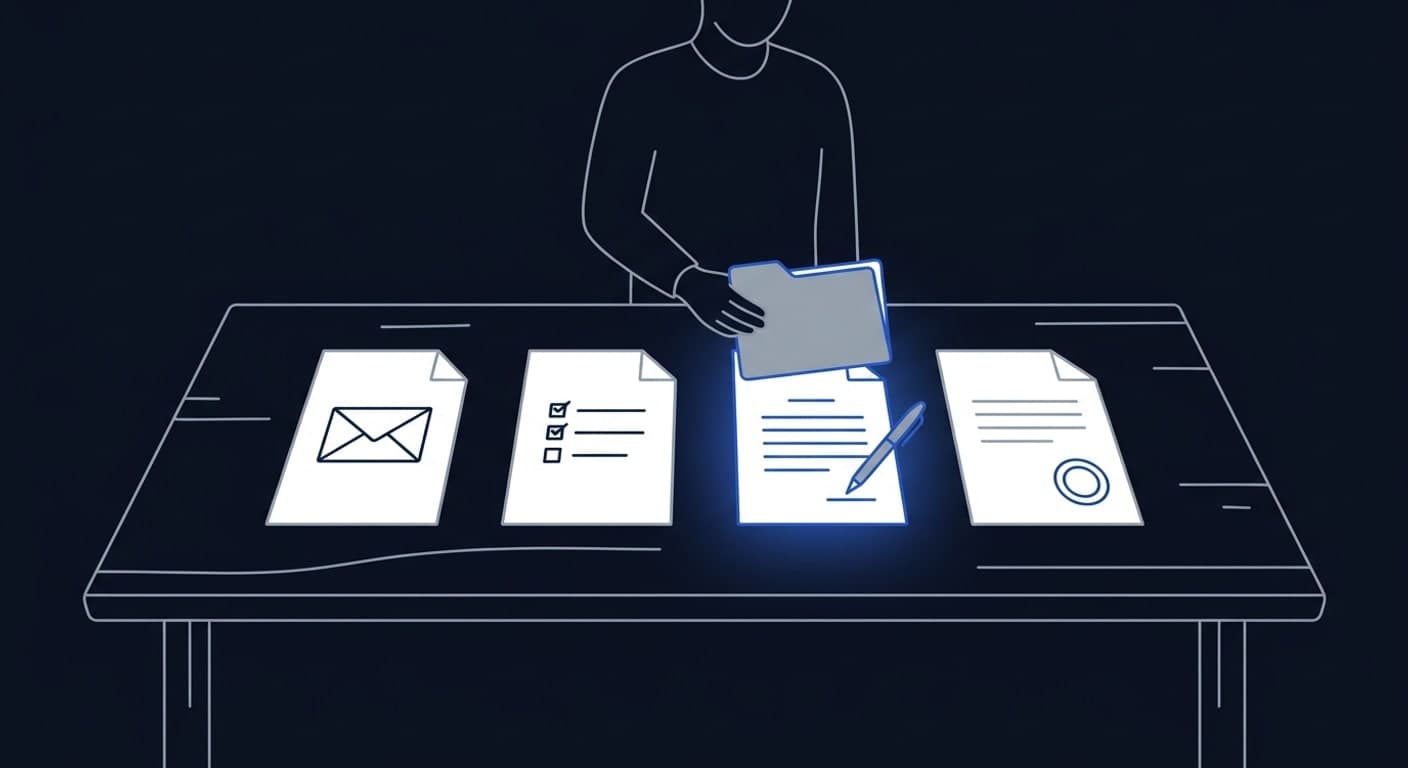
Here are the 4 main stages every business can use to keep deals moving cleanly.
- Initial contact
This is where a conversation starts. Someone replies to an email, answers a cold call, or fills out a form.
→ Log their basic details immediately. → Write down their name, company, and what they asked for. → Assign one person on your team to follow up.
The goal here is simply to record the conversation so it doesn't vanish into your daily routine. This gives you a clear record right from the start.
- Qualification
You ask a few specific questions before you spend time building a pitch. If you jump straight into proposals, you waste hours on people who were never going to buy.
→ Do they have the budget? → Are they the person who actually makes the decision? → Do they genuinely need what you sell right now?
This helps keep your team from wasting hours on the wrong fit. If the answer to any of these questions is no, you want to find out early. You protect your time and you save your energy for buyers who are ready.
- Proposal and negotiation
You present your offer and talk through their concerns. Once you know a buyer is a real match, you show them how you can help.
→ Walk them through your specific offer and the exact pricing. → Address their objections and talk through their doubts openly. → Agree on the specific terms of the deal and the project timeline.
This is where you handle the exact pricing, address their objections, and agree on the specific terms of the deal. Don't just email a price sheet and hope for a reply. Set a specific date to walk through the numbers together.
- Closed
The prospect either signs the contract or walks away. Every active deal on your board eventually reaches an outcome.
→ If they become a customer, they move out of the pipeline and into onboarding. → If they walk away, you log the deal as lost and write down exactly why it failed.
Did the price feel too high? Did their timing change? Did they pick a different provider? Logging the reason why a deal failed is the only way to spot patterns and fix your process over time.
A pipeline is not just a contact list
Here's an important distinction that many business owners miss.
A pipeline isn't just a static list of names in a spreadsheet. A list tells you who you spoke to. A pipeline tells you exactly what you need to do next to move the deal forward.
A contact list is passive. It sits in a document and gets stale. A real pipeline is active. Every single deal inside it must have an owner and a deadline. If a prospect has been sitting in your qualification stage for two weeks with no call scheduled, the deal is already slipping away.
Check your open deals today
I'd start by looking at your open deals right now.
You don't need complicated software to build this. A simple digital board or four columns on a whiteboard in your office is enough to get started. What matters is the habit of moving each conversation forward every single day.
Take twenty minutes this afternoon and write down your active deals. Put each one into one of these four stages. Do you know the exact next step for every single one? If you don't, set that next task before you finish your work today.
Get the newsletter
Short, direct notes on business and AI. No fluff, no spam.