
Make your premium offer the easy choice
October 10, 2026
Want a customer to choose your premium package? Don't just list it next to your basic one.
When buyers see only a cheap choice and an expensive choice, they get nervous. The price gap feels wide, so they protect their wallet and pick the cheapest option on the page. But there's a simple way to help people move past that hesitation without dropping your rates. You add an option nobody in their right mind would buy. That's the decoy effect.
How the decoy effect works
You introduce a deliberately worse option to change how buyers evaluate their other choices.
Why does it work?
Because when a new option is clearly inferior to your target offer, it gives the buyer an effortless way to justify choosing the target. People don't look at a price tag and automatically know what something is worth. We don't evaluate costs in a vacuum. Instead, we look for easy comparisons to make up our minds.
When you show only two options, comparing them feels difficult. The buyer has to weigh whether the extra features justify a big leap in cash. They start overthinking the trade-offs, and overthinking usually kills the sale. But once you introduce another choice that costs almost the same as your premium offer while stripping away key value, the comparison becomes instant. Your premium offer suddenly looks like an incredible bargain. The decoy gives the buyer a fast, effortless reason to choose your target.
An everyday example you already know
Say you walk into a local coffee shop.
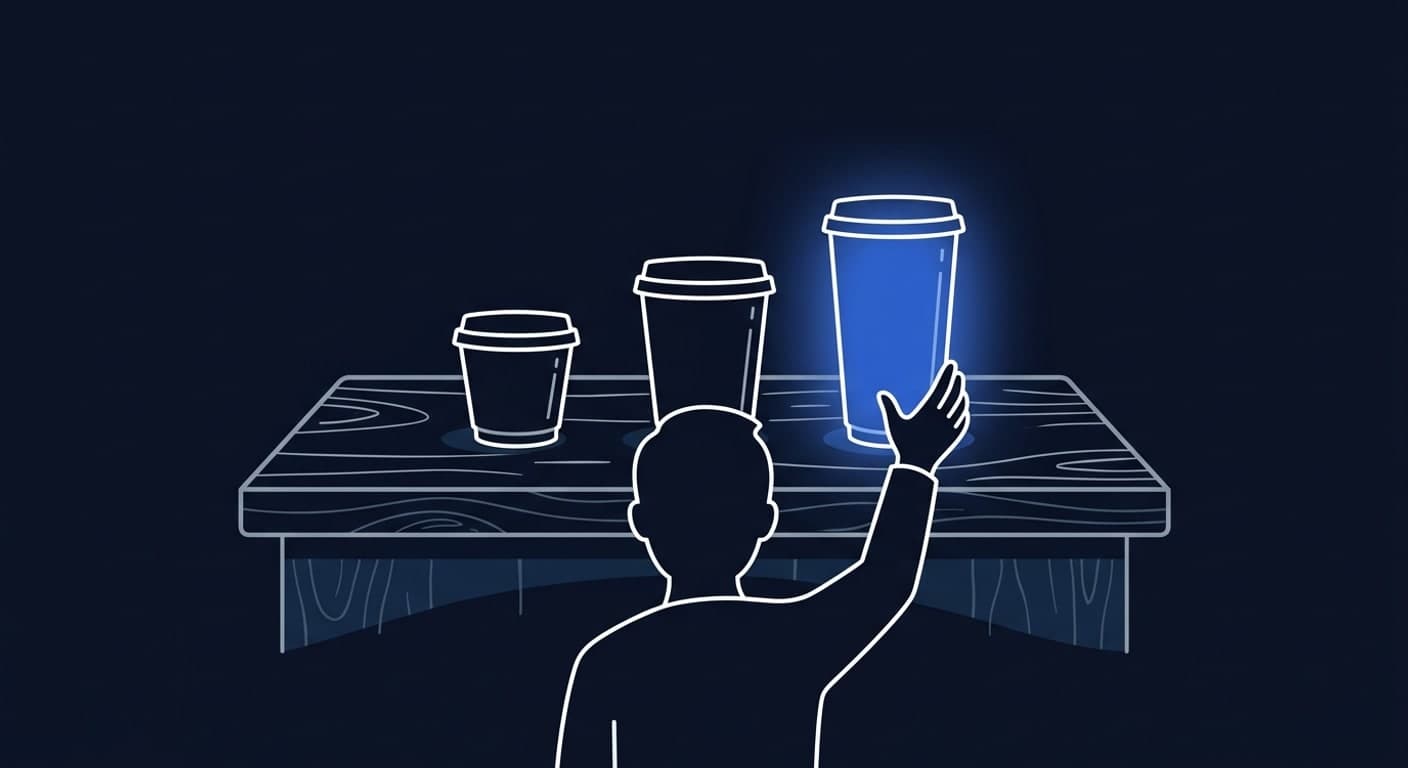
There is a small cup and a large cup. The small cup is cheap, and the large cup costs quite a bit more.
Given only those choices, you probably buy the small to save money. The gap feels too wide. You might want more coffee, but you tell yourself you don't really need it. The small cup feels like the sensible, responsible pick.
Then the shop adds a medium size, priced almost exactly the same as the large.
Suddenly, the entire decision flips. You aren't comparing the small cup to the large cup anymore. You are comparing the medium cup to the large cup. And in that comparison, the large looks like an incredible bargain. For just a fraction more, you get the biggest size available. You buy the large cup and walk out the door feeling like you beat the system.
You ignore the medium completely. It isn't there to be sold. It's only there to make the large look like the obvious winner.
How to structure your own pricing
This isn't just a trick for retail menus. It works just as well for agencies, consultants, software companies, and local service providers. Here's how to structure this in your own business:
-
Pick your Target Decide exactly which package or service tier you want most customers to buy. This is your flagship service. It has the margins you want and delivers the best outcome for the client.
-
Set the Baseline Offer a standard, cheaper alternative for prospects who strictly care about the lowest price. This tier covers the bare essentials. It exists to anchor the bottom of your lineup.
-
Build the Decoy Create a middle option priced very close to your Target, but strip away the key value. Make it clearly worse. Cut out the support, remove the core deliverables, or make the turnaround slow. The goal is to make it an option nobody rational would ever pick.
-
Present them side by side Show the tiers together in plain view so the contrast does the work for you. Let the buyer's eyes jump back and forth between the middle tier and the premium tier until the premium tier feels like the only sensible choice.
The mistake that ruins the strategy
There's an important distinction to keep in mind:
The decoy effect isn't about confusing your prospect.
If your packages are complicated and require the buyer to figure out what they get, the strategy backfires. When people feel overwhelmed, they delay the purchase entirely or just retreat to the cheapest alternative. Nobody buys when they have to do mental gymnastics just to understand an invoice.
The contrast has to be completely obvious at a glance. When a prospect scans your pricing, the right call should jump out in three seconds or less.
So look at your pricing page today. Are you making your best offer look like the easiest choice?
Get the newsletter
Short, direct notes on business and AI. No fluff, no spam.