
AI Workflow Automation vs Chatbots: Scaling Efficiently
September 19, 2026
AI workflow automation is often misunderstood as a synonym for chatbots, leading many businesses to invest in the wrong technology. While a chat interface can make a business feel modern, it rarely addresses the structural inefficiencies that slow down growth. Adding an AI layer to a broken process does not fix the process; it simply accelerates the rate at which errors occur. To truly scale, you must distinguish between the tools that talk to people and the tools that handle the heavy lifting of data and tasks.
Distinguishing Conversation From Operational Execution
A chatbot is essentially a sophisticated order-taker. It excels at answering repetitive questions, parsing intent from natural language, and providing a friendly interface for customers or employees. However, the conversation is just the surface level. If a customer asks for a status update on an order and the chatbot provides it, the chatbot is simply reading data. If the underlying data is a mess or requires manual entry from a human to be updated, the chatbot has not solved the core business problem.
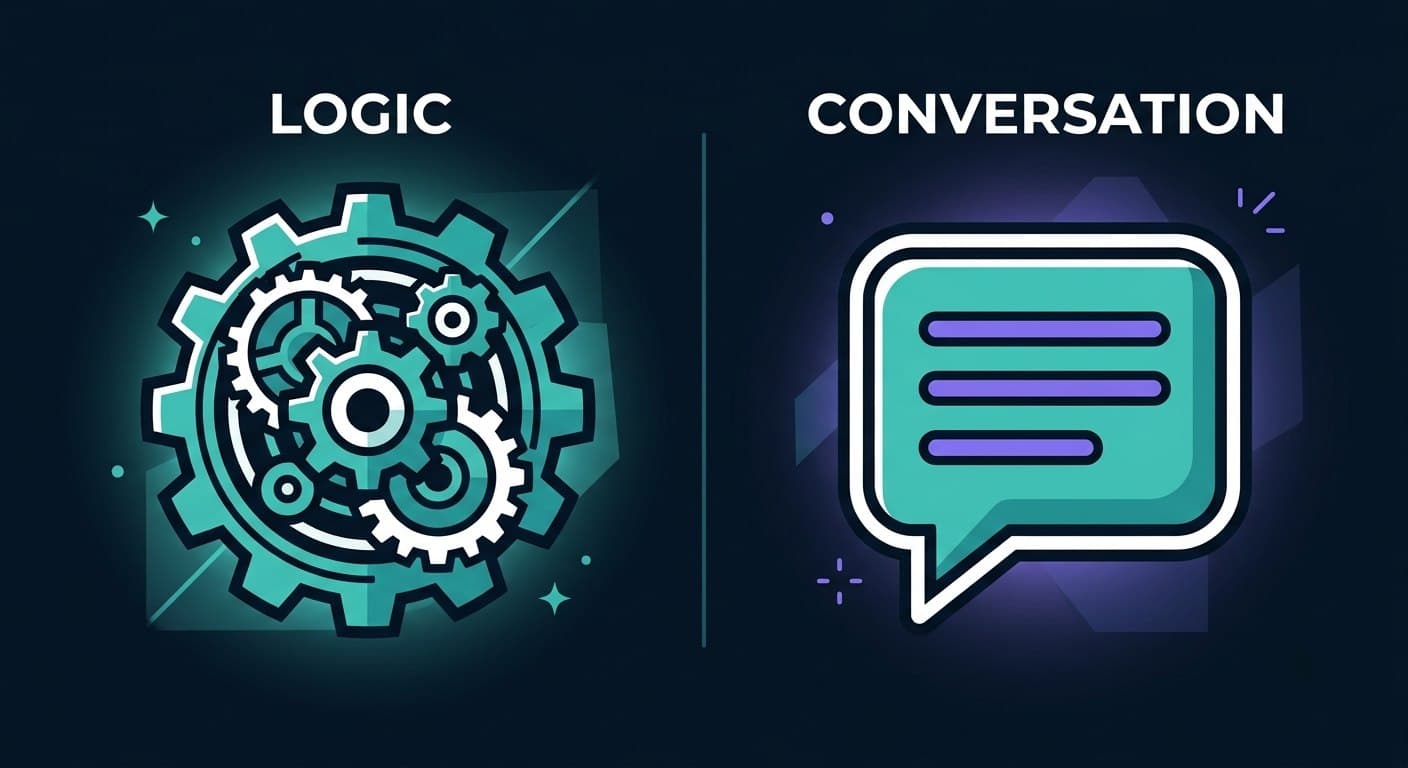
Real efficiency comes when you look past the interface. AI workflow automation focuses on the plumbing of your business—the invisible logic that moves information between platforms like your CRM, project management tools, and accounting software. While the chatbot handles the interaction, automation handles the fulfillment. One provides the front-end experience, while the other ensures the back-end results are achieved without manual intervention.
Implementing AI Workflow Automation Correctly
To choose the right tool, you must first identify whether you have a communication problem or a workflow problem. If your team is buried under an avalanche of identical support tickets, a chatbot is the correct solution. It filters the noise and provides immediate answers. But if your team is spending hours every week manually copying data from one spreadsheet to another or chasing down approvals via email, no amount of conversational AI will help. You need AI workflow automation to bridge those gaps.
The danger of the current AI hype is the magic fix mentality. Business owners often install a generic AI tool expecting it to resolve internal bottlenecks, only to find that their staff is still performing the same tedious manual tasks. Automation requires a strict logic. It thrives on clear, repeatable steps where data follows a predictable path. When you automate these rigid processes, you free your human talent to focus on high-value strategy rather than data entry.
Building a Scalable Foundation for Growth
Scalability is not about how many leads you can talk to; it is about how many leads you can actually serve. Many organizations find that their growth is capped because their manual processes cannot keep up with increased demand. By integrating AI workflow automation into your core systems, you create a structure that can handle ten times the volume without a linear increase in headcount. This is the difference between a business that looks efficient and one that actually is.
Before you invest in the latest conversational tool, audit your existing workflows. Document the path a single piece of data takes from the moment it enters your system until the task is completed. If that path involves unnecessary human touchpoints or copy-paste maneuvers, prioritize fixing those leaks first. Technology is a force multiplier. If your operations are streamlined, AI will make them incredibly powerful. If they are messy, AI will simply create a larger, more expensive mess.
Focus on building the systems that support your goals rather than chasing the interface that looks the most impressive. True business growth is quiet, efficient, and built on the solid foundation of automated execution.
Get the newsletter
Short, direct notes on business and AI. No fluff, no spam.